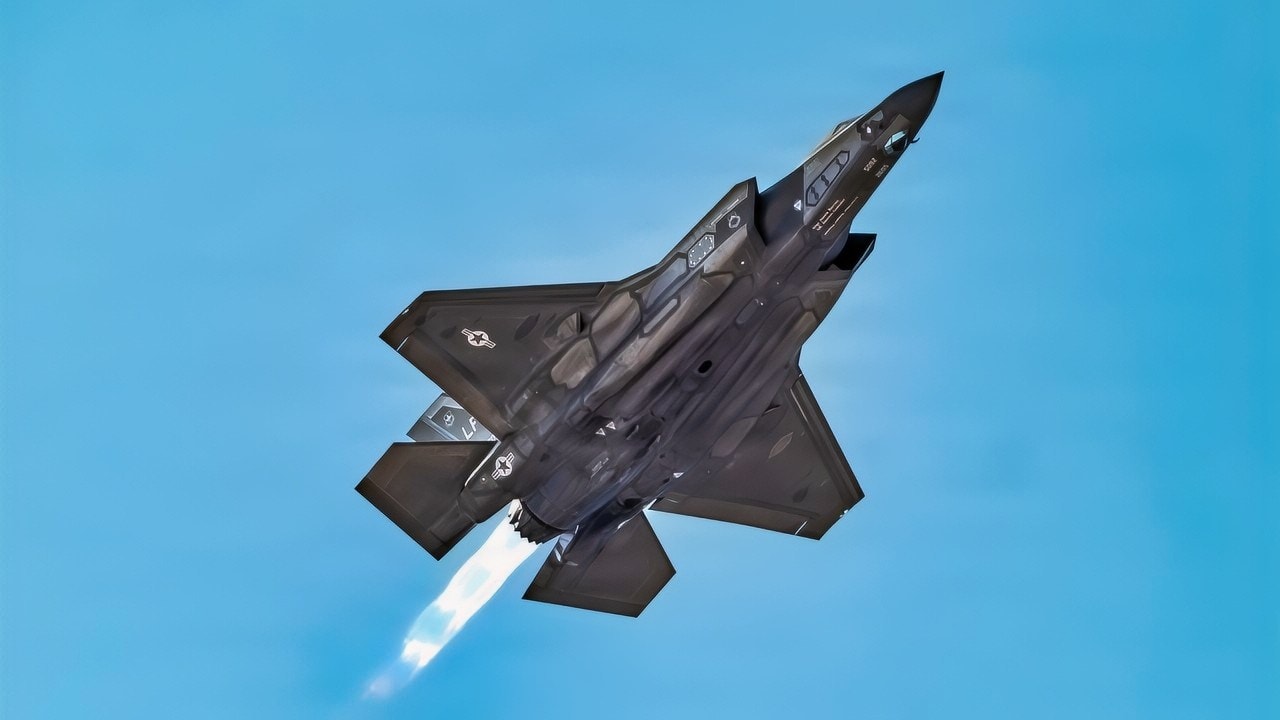
The Trump administration made headlines with a significant escalation of its anti-drug operations in the Caribbean, deploying a formidable force of F-35 Lightning II stealth fighter jets to Puerto Rico. This decisive move signaled a dramatic shift in strategy against powerful drug cartels operating in the region, particularly those allegedly linked to Venezuela. The deployment of these state-of-the-art aircraft follows a series of aggressive actions, including a controversial missile strike on a vessel in the Caribbean Sea, which the US claimed was transporting Venezuelan drug traffickers. This article delves into the rationale behind this deployment, its strategic implications, the legal controversies it sparked, and the broader context of the US's intensified war on drugs in Latin America.
A New Era of Interdiction: F-35s Join the Front Line
The arrival of ten F-35 Lightning II fighter jets in the US territory of Puerto Rico marks a clear intent from the Trump administration to intensify its military campaign against illicit drug trafficking networks in the Caribbean. These fifth-generation stealth fighters represent the pinnacle of modern aerial warfare technology, boasting advanced sensors, integrated avionics, and unparalleled stealth capabilities. Their deployment is not merely a show of force but a strategic re-evaluation of how the US tackles the persistent flow of illegal drugs into its borders.
Secretary of State Marco Rubio, alongside Secretary of Defense Pete Hegseth, articulated a dramatic shift in the US approach. Traditional methods of "interdiction," which often involve intercepting and boarding suspicious vessels, were deemed ineffective. Instead, a more aggressive stance was adopted: "What will stop them is when you blow them up. Instead of interdicting it, on the president’s orders, we blew it up. And it’ll happen again. Maybe it’s happening right now." This policy change was starkly demonstrated by a prior missile strike on a boat, which the Trump administration asserted was carrying eleven Venezuelan drug traffickers.
The F-35's capabilities make it a potent tool in this new strategy. Its advanced surveillance systems can detect and track targets with exceptional precision, even in challenging maritime environments. Once identified, its stealth attributes allow it to operate with a reduced risk of detection, while its payload capacity enables precision strikes. Against a backdrop of potentially hostile forces, such as Venezuela's air force, which operates older F-16 aircraft, the F-35 offers a decisive technological advantage. For a deeper dive into these impressive capabilities, explore F-35 Lightning II: Unpacking the World's Most Expensive Fighter Jet. This significant deployment underscores a commitment to eradicate drug operations through superior military power, a strategy that carries both promise and considerable risk.
Escalating Tensions and Legal Quandaries
The aggressive stance adopted by the Trump administration in the Caribbean has undeniably fueled existing tensions with Venezuela. The US has publicly accused Venezuela of "highly provocative" actions, including buzzing one of its warships in international waters, and implicitly linked the Maduro regime to the drug trafficking operations targeted by the new military campaign. These accusations are set against a backdrop where more than 50 countries, including the US, refuse to recognize Nicolás Maduro as Venezuela's legitimate head of state, citing alleged irregularities in the 2018 presidential election.
Unsurprisingly, Venezuelan President Nicolás Maduro has vehemently condemned the US actions, characterizing them as "seeking a regime change through military threat." He has pledged to bolster Venezuela's own armed forces in response, signaling a potential for further militarization of the region. This war of words highlights the deep ideological and political chasm between the two nations, where the fight against drugs intersects with broader geopolitical power struggles.
However, the legal justification for the US's enhanced military operations, particularly the deadly missile strike, has drawn significant scrutiny. Secretary of Defense Pete Hegseth defended the actions, asserting "absolute authority" to conduct such operations, claiming the targeted group was "assaulting" the US with illegal drugs. He famously stated, "I’d say we smoked a drug boat, and there’s 11 narco-terrorists at the bottom of the ocean. And when other people try to do that, they’re gonna meet the same fate." Yet, critics, including legal experts, quickly pointed out the lack of concrete evidence presented by the Trump administration to substantiate claims that the deceased were members of the Tren de Aragua criminal gang. Furthermore, constitutional concerns were raised regarding the executive branch's authority to conduct such lethal operations without a Congressional declaration of war or specific authorization. The designation of a group as a terrorist organization, legal scholars argued, does not grant the president "carte blanche to ignore Congress’s clear constitutional authority on matters of war and peace." This debate underscores a critical tension between national security imperatives and established legal frameworks, adding a complex layer to the ongoing military campaign.
The F-35's Role and Operational Realities
The F-35 Lightning II, a cornerstone of this new Caribbean strategy, is globally renowned for being the most expensive fighter jet project in history, with an estimated lifetime cost exceeding $1.7 trillion. Its deployment signifies a high-stakes investment in both technology and strategy. These jets offer unparalleled advantages in intelligence, surveillance, and reconnaissance (ISR) thanks to their integrated sensor fusion and advanced networking capabilities. This allows them to gather vast amounts of data, identify targets with extreme precision, and relay real-time information to naval assets and ground forces, making them ideally suited for tracking elusive drug smuggling operations across vast maritime stretches. Their stealth allows them to operate undetected in contested airspace, while their precision-guided munitions minimize collateral damage—at least in theory.
However, operating such advanced machinery comes with its own set of operational realities and risks. Military aviation, by its very nature, is a high-risk endeavor. Even the most sophisticated aircraft can face challenges ranging from mechanical failures and adverse weather conditions to human error and unexpected operational incidents. While the F-35 boasts an impressive safety record for a new generation aircraft, the history of military aviation is replete with incidents involving fighter jets. For instance, reports of a straaljager crash koeweit (fighter jet crash Kuwait) or similar incidents in various operational theaters serve as a stark reminder that even cutting-edge defense assets are not immune to accidents. These occurrences, regardless of cause, highlight the constant vigilance and rigorous maintenance required to ensure operational readiness and safety, especially when deploying assets in a demanding and potentially hostile environment like the Caribbean. The decision to commit such valuable assets reflects the perceived gravity of the drug trafficking threat, but also the inherent dangers involved in sustained, high-intensity operations.
Strategic Implications and Future Outlook
The deployment of F-35s to the Caribbean, coupled with the Trump administration's aggressive "blow them up" policy, carries profound strategic implications for regional stability and international relations. On one hand, proponents argue that such a decisive military posture is necessary to dismantle powerful, well-funded drug cartels that pose a direct threat to US national security and public health. The F-35s could enhance the effectiveness of interdiction efforts, reduce the flow of narcotics, and deter future trafficking attempts. For more on the specifics of these intensified operations, readers can refer to US Escalates Caribbean Operations with F-35s Against Drug Cartels.
On the other hand, critics warn of potential destabilization. The militarization of anti-drug efforts risks escalating tensions with Venezuela, potentially drawing the US into a broader regional conflict. Venezuela's accusations of "regime change" intentions, coupled with its pledge to strengthen its own military, paint a concerning picture of an arms race in an already volatile part of the world. Moreover, questions persist about the long-term efficacy of a purely military solution to a problem with deep socio-economic roots. While F-35s can destroy drug shipments, they do not address the underlying causes of drug production and demand, nor the complex networks that facilitate trafficking. The financial cost of sustained F-35 operations, combined with potential diplomatic setbacks, could outweigh the benefits if not managed carefully. The future outlook for the Caribbean, therefore, hinges on a delicate balance between aggressive enforcement, diplomatic engagement, and addressing the multifaceted challenges of drug trafficking.
The Trump administration's deployment of F-35 stealth jets to the Caribbean represents an audacious and controversial escalation in the war on drugs. This strategic shift, characterized by a more aggressive posture and the explicit use of lethal force against suspected drug traffickers, underscores a determination to curb the flow of narcotics through military might. While the F-35s bring unparalleled technological advantages to the front line, their deployment has ignited significant legal debate and intensified geopolitical tensions with Venezuela. The balance between effective enforcement and the potential for regional destabilization, coupled with the inherent operational risks associated with advanced military hardware, leaves the long-term implications of this strategy uncertain. The world watches as this high-stakes gamble unfolds in the Caribbean, redefining the contours of international drug interdiction efforts.